Understanding the start and end dates of your visa validity is crucial to ensure compliance with immigration regulations and avoid legal issues. Therefore, Govietnamvisa.com will provide you with detailed information on when a visa validity period begins, how to check it, and the consequences of overstaying your visa.
1. When does a visa validity period start?
This is a core question that anyone applying for a visa is concerned about. Many people confuse the visa issue date with the visa validity start date (effective date). These two dates are not always the same. Specifically:
➤ Visa issue date: The date on which the consular authority officially issues your visa. This date is usually printed or stamped on the visa.➤ Visa validity start date (effective date): The date from which you are allowed to enter the country that issued the visa. This is the key date used to calculate your visa validity period.
So, when does a visa validity period start? The answer depends on the type of visa and the regulations of each country, but generally there are two main cases:
From the issue date (the arrival date you applied for Vietnam visa): Some visas, especially short-term tourist visas in certain countries, are valid starting from the date they are issued.From the first entry date: Many types of visas, often those with longer validity or multiple entry permissions, start counting from the date you actually enter the issuing country. This means that even if your visa was granted earlier, the validity period only “starts running” once you arrive in the country.
Example: About Vietnam visa, you are granted a 1-month tourist visa to Vietnam, and the visa clearly states “Valid From” June 08, 2026, until July 08, 2026. Even if you arrive in Vietnam on July 1, 2026, your 1-month validity is still calculated from July 08, 2026.
To avoid confusion, always carefully read the details printed on your visa. Pay attention to terms such as “Valid From”, “Enter Before” or similar notes.
2. Where to Find the Visa Validity on Your Visa?
Locating the validity information on your visa is very important. While it’s usually not difficult to find, the layout may vary depending on the issuing country and the type of visa. Below is a general guide:
- Check the main information section: Visa validity details are typically located in the central section of the visa, where the most important information is displayed.
- Look for key terms - Search for the following terms (or their equivalents in English or the issuing country’s language):
- Valid From / Effective Date: The date the visa becomes valid.
- Valid Until / Expiration Date: The last date the visa remains valid. You must leave the issuing country on or before this date.
- Duration of Stay: The maximum number of days you are allowed to stay in the country per entry (for multiple-entry visas).
- Entries “Good for single/multiple entries”: Usually marked as “Single”, “Double”, or “Multiple” entries.
- Read any notes (if applicable) : Some visas may contain additional notes regarding validity or entry conditions. Always read these carefully to ensure you fully understand the regulations.
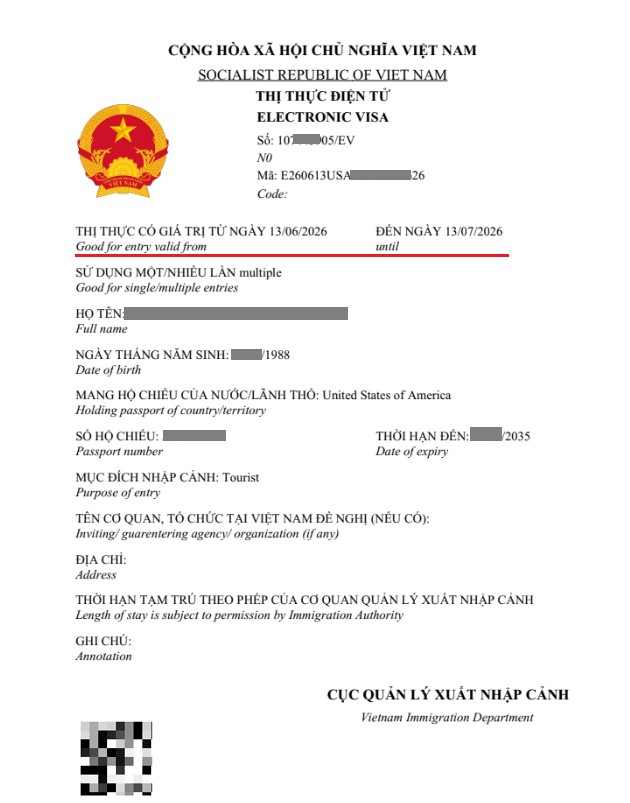
Visa validity shown on eVisa
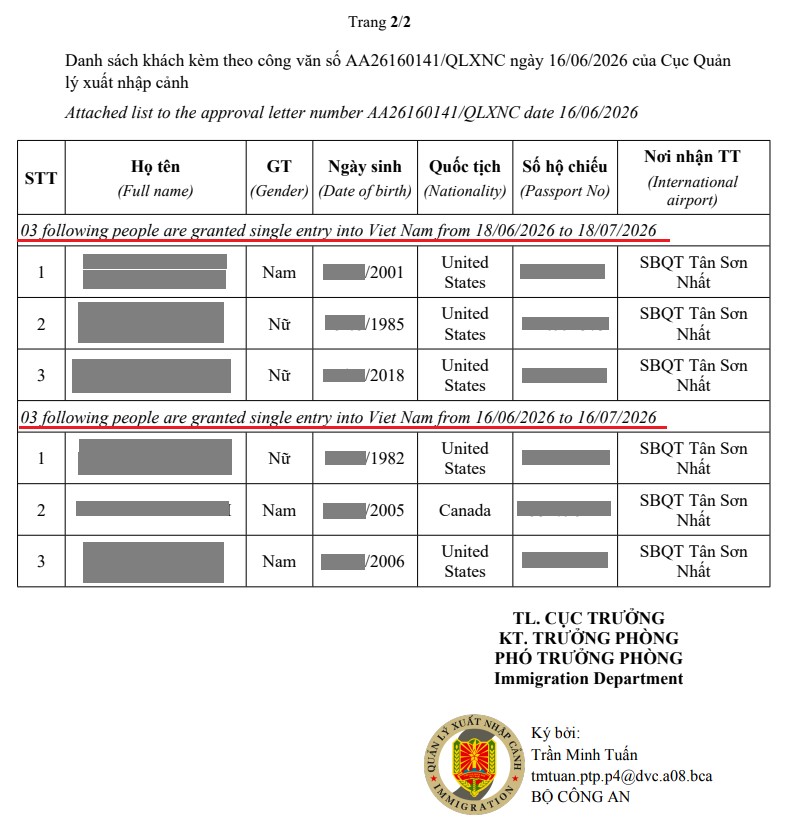
Visa validity as shown on the approval letter for VOA
3. Visa Validity Periods in Vietnam
Vietnam issues different types of visas, each with its own validity period and conditions. Below are some of the most common visa types:- Tourist Visa (DL): Usually valid for 1 to 3 months. Can be single-entry or multiple-entry.
- Business Visa (DN1, DN2): Valid for up to 12 months, depending on purpose and supporting documents.
- Work Visa (LD1, LD2): Up to 2 years, typically tied to the duration of the labor contract or work permit.
- Investment Visa (DT1, DT2, DT3, DT4): Can be valid for up to 5 years, depending on the scale and type of investment.
- Dependent/Family Visa (TT): Up to 12 months, for foreign spouses, children of Vietnamese citizens, or dependents of foreigners holding temporary/permanent residence permits in Vietnam.
- Student Visa (DH): Depends on the duration of the study program, usually from 1 year up to 5 years.
4. How Many Days Before Expiration Should You Extend Your Visa?
According to regulations, you should apply for a visa extension before your current visa expires. However, there is no strict rule on the exact number of days in advance, as it depends on the reviewing authority and the type of visa.
That said, to ensure safety and avoid unexpected issues, Govietnamvisa.com recommends that you start preparing your documents and submit your visa extension application at least 10 days in advance - ideally 15-30 days before your visa expires. The reasons are:
- Processing time: Visa extension applications may take 5-7 working days to process, , sometimes longer depending on individual cases
- Document supplementation: If your application is missing documents, you will need extra time to prepare.
- Avoiding risks: Submitting early prevents your visa from expiring while your extension is still under review, which can lead to legal complications.
5. Consequences of Overstaying a Visa
Staying in Vietnam beyond your visa’s validity, even for just one day, is considered a violation of the law and may result in serious consequences, such as:
- Administrative fines: From 500,000 VND to 5,000,000 VND depending on the number of days overstayed.
- Deportation: In serious cases, you may be deported from Vietnam.
- Entry ban: If deported, you may face a ban on re-entering Vietnam for a certain period, or even permanently.
- Impact on credibility: Violating visa laws in one country may negatively affect your chances of obtaining visas from other countries in the future.
- Daily life difficulties: Once your visa expires, you may face issues with renting housing, opening bank accounts, or even traveling domestically
Understanding your visa validity and extension rules is essential to ensure a smooth and worry-free journey in Vietnam. At Govietnamvisa.com, our experienced team is ready to provide you with clear advice and dedicated support, helping you save time, avoid risks, and travel with peace of mind. Contact us today for a free consultation and let us take care of the paperwork, so you can focus on enjoying your trip.
☎️ Hotline: +84.903.278.853 (Zalo, WhatsApp, Viber available)
📩 Email: support@govietnamvisa.com / visa@govietnamvisa.com
🌐 Website: https://govietnamvisa.com
🏣 Address: Van Nam Building, 26 Lang Street, Hanoi, Vietnam